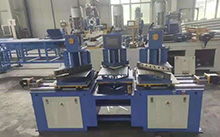
Coil insulation quality is one of the biggest drivers of transformer and motor reliability — especially as 2026 designs push higher power density, higher temperatures, and stricter lifetime expectations. Vacuum pressure impregnation (VPI) improves insulation by pulling air and moisture out of windings and forcing varnish or resin deep into voids, creating a stronger and more stable dielectric system. This guide explains the performance benefits of upgrading and what to check when evaluating vacuum impregnation equipment for sale.
1. Vacuum Pressure Impregnation vs. Dip and Bake: Why the Upgrade Matters
What Changed in Modern Coil Design
Transformers and motors in 2026 operate at higher power densities, tighter slot fills, and more demanding thermal and mechanical conditions than designs from a decade ago. These changes expose the limitations of basic impregnation methods.
| Design Challenge | Basic Dip Method Limitation | VPI Advantage |
|---|
| Tighter slot geometry | Resin cannot penetrate by gravity alone; air pockets trapped | Vacuum removes air before resin fill; pressure drives penetration |
| Higher continuous temperature | Incomplete saturation creates insulation hot spots | Full void fill improves thermal conductivity |
| High-frequency switching stress | Air voids become partial discharge initiation sites | Void elimination reduces PD risk |
| Vibration from inverter drives | Incomplete bonding allows winding movement | Full resin encapsulation locks conductors |
| Stricter lifetime expectations | Moisture retention accelerates insulation aging | Vacuum stage removes moisture before resin cure |
The Fundamental Difference
Dip and bake relies on gravity and capillary action to draw resin into the coil. For simple, open winding geometries at low thermal class, this is adequate. For tight modern designs, air pockets remain — and each air void is a site for partial discharge, moisture absorption, and thermal insulation weakness.
VPI targets the problem at its source: remove everything from the void first, then drive the resin in.
2. Vacuum Pressure Impregnation Working Principle: Stage by Stage
The Process Sequence
Each stage in the VPI cycle serves a specific purpose. Understanding what each stage does explains why process parameter control is critical.
| Stage | What Happens | Why It Matters |
|---|
| Preheat and dry | Coil heated to defined temperature before entry into the tank | Drives residual moisture out of the winding; prepares resin absorption |
| Vacuum degassing | Tank evacuated to target vacuum level with coil inside | Removes air from all accessible voids in the winding; removes residual moisture |
| Resin fill under vacuum | Resin introduced into the evacuated tank while vacuum is maintained | Resin enters the coil under negative pressure; air cannot re-enter |
| Pressure impregnation | Tank pressurized above atmospheric | Pressure forces resin deeper into micro-voids that vacuum fill alone cannot penetrate |
| Drain and rotation | Excess resin drained; coil rotated or positioned for even distribution | Prevents resin pooling; ensures uniform coverage |
| Curing | Coil transferred to cure oven or heated in the tank | Cross-links the resin; locks the impregnated structure permanently |
Key Parameters That Control Results
| Parameter | Effect on Quality | Typical Range |
|---|
| Vacuum level | Deeper vacuum removes more air and moisture | 1–10 mbar for production VPI |
| Pressure level | Higher pressure forces resin into finer voids | 2–6 bar typical for transformer windings |
| Resin temperature and viscosity | Lower viscosity at higher temperature improves penetration | Resin supplier specifies optimal window |
| Soak time at pressure | Longer soak allows more complete fill of deep or narrow voids | 15–60 minutes typical |
| Preheat temperature | Must be above the dew point; consistent with resin cure chemistry | 60–120°C depending on resin system |
3. Vacuum Impregnation Equipment for Sale: Performance Benefits
Electrical Performance Improvements
| Electrical Property | Improvement Mechanism | Measurable Benefit |
|---|
| Dielectric withstand strength | Full void elimination removes PD initiation sites | Higher Hi-Pot test pass rates; lower failure rate in field |
| Insulation resistance and polarization index | No moisture retention; uniform dielectric structure | Higher IR and PI test values; better insulation condition monitoring |
| Partial discharge behavior | No air pockets for PD activity to initiate | Reduced PD level in acceptance testing |
| Long-term insulation stability | Resin encapsulation prevents moisture ingress over service life | Extended MTBF; reduced maintenance intervention |
Thermal Performance Improvements
Air is an effective thermal insulator. Every air void in a winding reduces the ability of the insulation system to conduct heat from the conductor to the core or cooling path. VPI replaces air voids with resin — which has significantly better thermal conductivity than air.
Practical outcomes:
Reduced winding hotspot temperature at rated load
Improved performance at the rated temperature class
Reduced insulation aging rate — thermal aging is exponential with temperature
Mechanical Performance Improvements
Full resin encapsulation bonds conductors and insulation into a unified structure
Eliminates conductor vibration and winding movement under electromagnetic forces
Reduces acoustic noise — the "buzz" from loosely bound windings under load
Improves resistance to vibration from inverter drive harmonics and transport shock
4. Vacuum Impregnation Equipment for Sale: What Features Define a Production-Ready System
Core Equipment Specifications to Evaluate
| Specification | What to Confirm | Why It Matters |
|---|
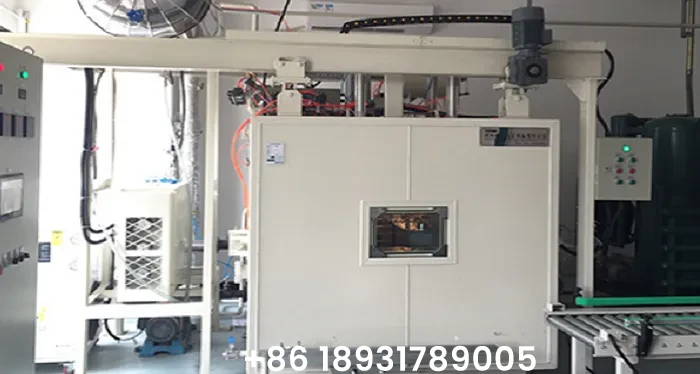
| Tank working volume | Internal dimensions vs. maximum coil size and batch load | Determines whether your product range fits without modification |
| Vacuum pump capacity | Ultimate vacuum level and pump-down time | Deep vacuum requires adequate pump size; pump-down time affects cycle time |
| Pressure vessel rating | Maximum operating pressure with safety factor | Must exceed your process pressure requirement with margin |
| Heating system | Heating method (electric, oil, steam), temperature uniformity, ramp rate | Temperature consistency affects resin viscosity and cure quality |
| Resin storage and conditioning | Heated resin tank, temperature control, agitation | Maintains resin viscosity in the correct process window |
| Resin filtration | Filtration between resin tank and impregnation tank | Prevents particulates from entering the winding |
Automation, Control, and Traceability
| Feature | Production Benefit |
|---|
| Recipe-based cycle control | Stored programs for each coil type; reduces operator error |
| Data logging per batch | Records vacuum level, pressure, temperature, and time for QA documentation |
| Alarm management | Alerts for deviation from parameter limits before a batch is compromised |
| HMI interface | Operator-readable process status; no manual record-keeping required |
| Export to QA system | Batch records linkable to serial number or order number for traceability |
Safety Requirements
Pressure safety valves rated for the maximum operating pressure
Electrical interlocks preventing pressurization with open manhole or drain
Solvent/resin vapor ventilation for operator safety
Resin temperature controls preventing overheating in the resin conditioning tank
5. Vacuum Pressure Impregnation ROI: How to Justify the Upgrade
Cost Drivers VPI Can Reduce
| Cost Category | How VPI Reduces It | Estimation Approach |
|---|
| Insulation failure scrap | Full void fill reduces the failure modes that cause coil rejection | Compare current scrap rate against projected yield with VPI |
| Rework labor | Consistent saturation reduces partial failures that require rework | Rework hours × labor rate × annual production volume |
| Warranty claims | Better dielectric stability and mechanical bonding reduces field failures | Warranty claim cost × current field failure rate |
| Noise complaints | Full conductor encapsulation eliminates vibration-related buzz | Product return rate from acoustic quality issues |
| Premature maintenance | Extended insulation life reduces scheduled and unscheduled maintenance | MTBF improvement × maintenance cost per event |
Productivity Considerations
VPI adds process time compared to simple dip impregnation, but this is often offset by:
Higher first-pass yield — fewer parts going back for rework or rejection
More consistent cycle times with recipe-based automation
Better throughput planning predictability versus variable manual processes
Validation Plan Before Full Production Commitment
Process pilot coils through the VPI system and compare test results (IR, PI, Hi-Pot, PD) against dip-and-bake baseline
Cross-section pilot coils to visually confirm void elimination and resin penetration depth
Run a small production batch; track yield, test pass rates, and process cycle time
Compare actual results against the ROI projection before scaling
Conclusion
If your coils face higher thermal load, vibration, or stricter lifetime requirements, upgrading to vacuum pressure impregnation delivers measurable performance gains: stronger dielectric systems, better heat transfer, and improved mechanical stability. The right vacuum impregnation equipment for sale should be sized for your coil range, built for repeatable automated control, and supported with safety and traceability features for production quality assurance.
FAQ
Q1: What is vacuum pressure impregnation used for?
VPI is used to impregnate electrical windings in motors, transformers, and generators with varnish or resin to eliminate air voids, improve dielectric strength, enhance thermal conductivity, and mechanically bond the winding structure. It is the preferred method for high-reliability or high-performance coils where basic dip impregnation cannot achieve consistent void-free saturation.
Q2: How is vacuum pressure impregnation different from dip and bake?
Dip and bake relies on gravity and capillary action — resin penetrates where surface tension and gravity allow, leaving air pockets in tight or deep regions of the winding. VPI first removes all air and moisture under deep vacuum, then introduces resin under vacuum to prevent air re-entry, then applies pressure to drive resin into micro-voids that vacuum alone cannot reach. The result is significantly more complete and consistent void fill.
Q3: What electrical tests typically improve after switching to VPI?
Insulation resistance and polarization index (IR/PI) improve because moisture is removed and voids are filled. Hi-Pot (dielectric withstand) pass rates improve because partial discharge initiation sites are eliminated. Partial discharge testing shows lower PD levels. In field applications, the improvement manifests as longer MTBF and fewer insulation-related failures.
Q4: What should I confirm when evaluating vacuum impregnation equipment for sale?
Confirm the tank internal working dimensions versus your largest coil batch, the vacuum pump ultimate vacuum level and pump-down time to your process vacuum, the pressure vessel rating with its safety margin, the heating system temperature uniformity, resin storage and conditioning temperature control, automation capabilities including recipe control and batch data logging, and the supplier's safety certification and commissioning support offering.
Q5: How do I estimate ROI for a VPI system investment?
Quantify your current annual cost from coil scrap, rework labor, warranty claims, noise-related returns, and premature field maintenance attributable to insulation quality. Estimate the expected improvement from VPI — typically 30–60% reduction in insulation-related failure modes based on industry experience. Calculate payback period by dividing the equipment investment by the annual cost reduction. Include productivity factors: consistent cycle times and higher first-pass yield reduce indirect costs beyond the direct failure savings.
Daniel Richardson
Senior Power Systems Engineer (PE)
With 18 years dedicated to electrical infrastructure design, I specialize in advanced industrial power quality solutions. As a certified Professional Engineer, I have successfully led high-stakes substation projects, serving major Fortune 500 clients across Asia-Pacific.
 English