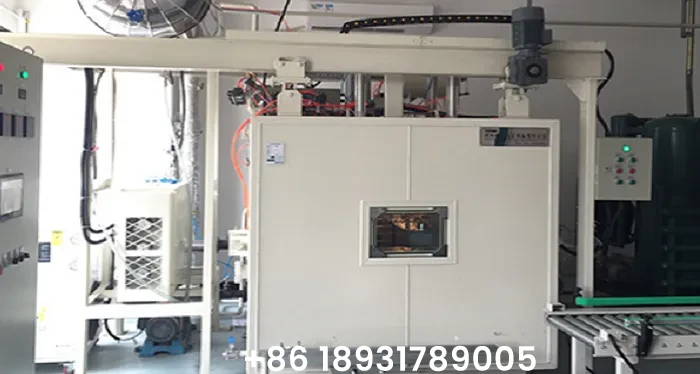
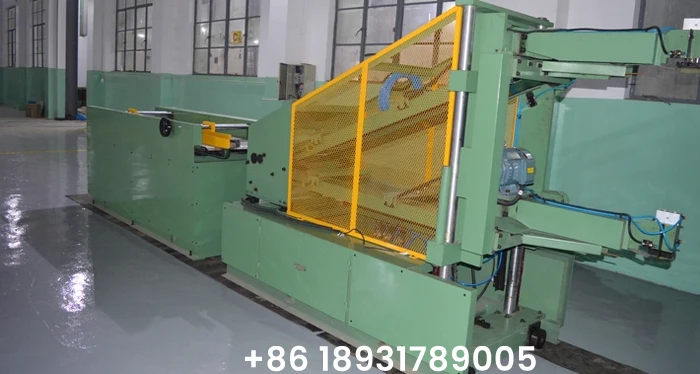
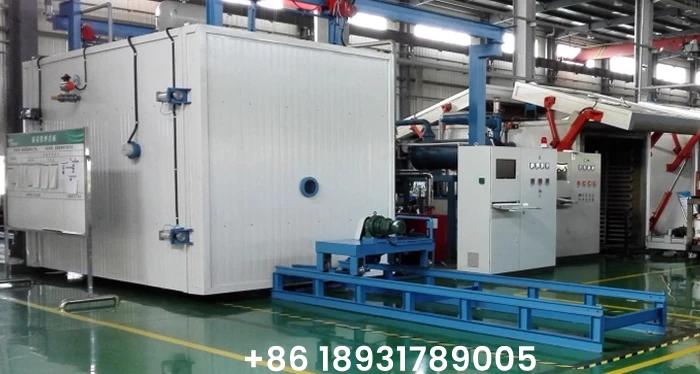
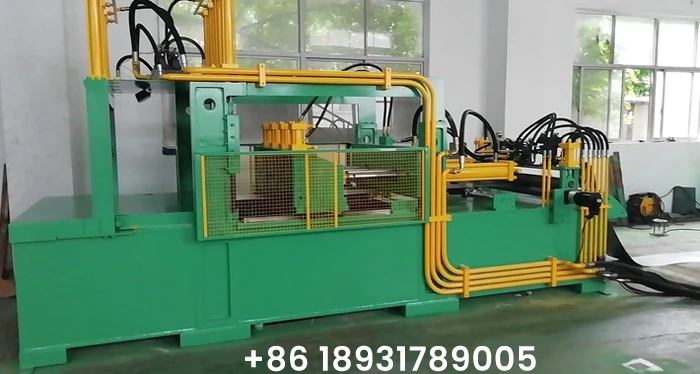
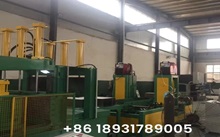
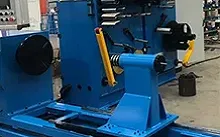
In modern electric equipment production, transformers are one of the indispensable key components, and transformer core winding machines play a crucial role in the manufacturing process of transformers. These machines, with their efficient and precise winding capabilities, significantly enhance the efficiency and quality of transformer production. Not only can these devices boost production speed, but they also ensure the consistency and precision of core winding, thereby meeting the stringent requirements of the transformer industry for high quality, reliability, and performance.
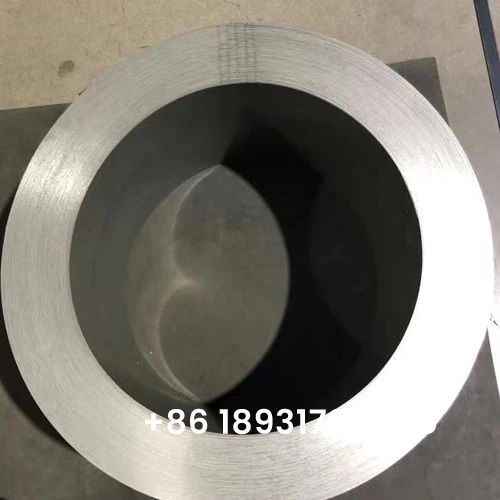
Working Principle and Technical Advantages of Transformer Core Winding Machines
The core function of a transformer core winding machine is to precisely wind the winding material onto the core to form the winding. Using computer control and automation technology, the transformer core winding machine can accurately control the number of coils, the arrangement, and the winding tension, ensuring each winding layer is uniform. Modern transformer core winding machines are usually equipped with an automatic tension control system, which continually maintains the stability of the wire tension during winding, preventing unevenness or damage caused by tension fluctuations.
Moreover, these machines feature a high level of automation and can automatically complete the entire process from coil placement to winding, reducing the need for manual intervention and enhancing the degree of production automation. This automation technology not only saves a considerable amount of labor costs but also reduces human errors, ensuring that each transformer core meets quality standards.
The Role of Transformer Core Winding Machines in Improving Production Efficiency
As the demand for efficient transformer production increases, traditional manual winding methods have gradually become unable to meet production efficiency requirements. Manual winding not only requires a large workforce but also has issues such as long production cycles and unstable winding accuracy. The transformer core winding machine, through efficient automated operations, significantly increases production efficiency. First, the transformer core winding machine can complete a large amount of winding work in a short time. Compared to traditional manual operations, automated winding machines can considerably shorten production cycles and increase the output per shift. Second, the high-precision control of the machine can reduce the defect rate and minimize losses due to human operational errors or uneven winding. Hence, while enhancing production efficiency, the transformer core winding machine also optimizes material utilization and reduces waste in the production process.
The Role of Transformer Core Winding Machines in Ensuring Product Quality
During transformer manufacturing, the quality of the winding directly affects the performance and reliability of the transformer. With their precise control systems and high automation technology, transformer core winding machines ensure the consistency and high precision of the winding process. The thickness, tension, and arrangement of each winding layer can be precisely adjusted through sophisticated calculations and control systems, ensuring the winding quality of each core meets the design standards. As an important transformer core manufacturing machine, the transformer core winding machine can also monitor abnormalities during the winding process in real time through its built-in monitoring system, identifying and correcting issues promptly. This accurate monitoring and quality control significantly lower the rate of unqualified products due to winding issues, enhancing the overall reliability of transformers. Therefore, transformer core winding machines not only improve production efficiency but also play an essential role in ensuring product quality.
Diverse Applications of Transformer Core Winding Machines
Transformer core winding machines hold a significant position not only in large-scale transformer production but also in the production of various other electric and electronic devices. As electric equipment continues to develop, transformer core winding machines have gradually adapted to the winding needs of different types and specifications. For example, for the production of small transformers, inductors, and electrical components, automatic winding machines can flexibly adjust according to different design requirements, meeting diverse production needs.
The high flexibility of modern transformer core winding machines enables them to support winding operations for different materials and specifications. This flexibility not only meets the production requirements of different types of transformers but also provides more customized production options for clients. Whether it is high-power electric transformers or small electronic transformers, automatic winding machines can efficiently and accurately complete the winding tasks.
Future Development Trends of Transformer Core Winding Machines in Manufacturing
With the continuous advancements in industrial automation technology, the technology of transformer core winding machines is also continuously innovating. In the future, with the development of intelligent and IoT technologies, transformer core winding machines might become more intelligent, offering more precise adaptive control and fault diagnosis. Additionally, as the demand for green manufacturing and energy conservation increases, future transformer core winding machines will focus more on energy efficiency and environmentally friendly designs, further enhancing sustainable production. As transformer and electric equipment manufacturers increase their quality requirements, transformer core winding machines will continue to develop towards high precision and high reliability. The next generation of winding machines will not only enhance production efficiency but will also feature stronger self-detection and optimization capabilities, capable of achieving intelligent production and quality control. It can be foreseen that future transformer core winding machines will play an even more critical role in transformer production, driving the electrical industry to more intelligent, precise, and efficient manufacturing.
Transformer core winding machines play an irreplaceable role in efficient production. With advanced automation technology and high-precision control, transformer core winding machines not only increase production efficiency but also ensure the quality and consistency of each transformer core. In the production of electric equipment, the widespread application of transformer core winding machines enables manufacturers to quickly and efficiently produce high-quality products that meet standards. With continuous technological advancements, transformer core winding machines will continue to drive the development of the transformer industry and provide more intelligent and efficient solutions for future electric equipment manufacturing.
Daniel Richardson
Senior Power Systems Engineer (PE)
With 18 years dedicated to electrical infrastructure design, I specialize in advanced industrial power quality solutions. As a certified Professional Engineer, I have successfully led high-stakes substation projects, serving major Fortune 500 clients across Asia-Pacific.
 English